National Socialist
Well-known Member
- Jun 24, 2025
- 81
- 39
These are quotes from Angela Davis book. I read her book Are Prisons Obsolete? and I liked it so I decided to read this. I'll bold what seems most important.
Teen Vogue publishes multiple articles, all identifiable with the tag abolition, on topics ranging from how police do not make us safer to why hate crime laws will not end anti-Asian violence.
As some recognized twenty years ago, abolition is most effectively advanced by naming and elevating an analysis and practice that is collective and feminist.
We mobilize in outrage against the rape of another woman and reject increased policing as the response.
We hold people accountable and believe that people can change.
Sisters Uncut network concretely identifies and demands how budgetary resources can be removed from carceral forms and reinvested in communities, in health care, education, and the arts.
During the period preceding the murder of George Floyd, Breonna Taylor, a young Black woman who worked as an emergency medical technician, was executed by police in Louisville, Kentucky, as they entered her residence on a no-knock warrant apparently issued because she was a prior acquaintance of a person sought by the police.
(the collective, CopsAreFlops, has maintained that the South African Police Service purportedly kills three times more people per capita than US police forces),
recognizing that those in Montreal and London are involved in the same conversation as our South African counterparts strengthens our capacity to argue that policing can be driven by structural racism even when the majority of police officers are Black people.
The Women’s House of Detention was also praised for its incorporation of emergent “scientific research,” particularly the practice of carceral isolation as a response to the assumption that one of the “leading causes of crime” was the “ease with which young offenders become influenced by older law-breakers in prison."
Immigrant detention facilities, many of them owned and operated by private prison companies, further consolidated strategies of what is now referred to as “mass incarceration.”
the recognition that race, gender, class, and sexuality were more important determinants of who goes to prison than simply the commission of a crime.
I hate Obama.In a December 2020 interview, former president Barack Obama offered a familiar critique: “Snappy slogans” such as “defund the police” are damaging. He stated: “You lost a big audience the minute you say it, which makes it a lot less likely that you’re actually going to get the changes you want done.”
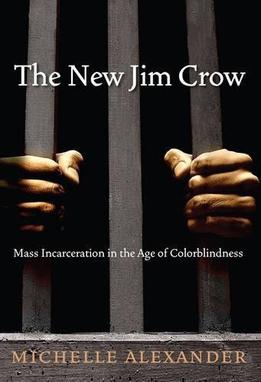
in Ava DuVernay’s film 13th, Bryan Stevenson states that there are currently more Black men in prison than there were Black men enslaved in 1850, a point also emphatically made in Michelle Alexander’s The New Jim Crow.
the United States incarcerates more people—both absolutely and per capita—than any other country in the world,
federal legislation like the First Step Act, which opened up potential pathways for releasing a very limited number of people from the federal system—cannot even begin to address the structural character of carceral racism.
Challenging the prevalent assumption that deinstitutionalization of the public asylums helped to drive homelessness and the rise in incarceration, she writes:
deinstitutionalization did not lead to homelessness and increased incarceration. Racism and neoliberalism did, via privatization, budget cuts in all service/welfare sectors, and little to no funding for affordable and accessible housing and social services, while the budgets for corrections, policing, and punishment (of mostly poor people of color) skyrocketed.
He's a Democrat.In response to mounting pressure from grassroots movements, led and shaped by abolition feminist organizing after Kalief Browder’s death, in 2019 a commission appointed by then mayor Bill de Blasio proposed to close Rikers Island Correctional Facility, the largest jail in the United States, and to open new four jails, one in each borough of the city, with an estimated price tag of almost $11 billion.
...
Many recognized that four new jails would clearly expand, not shrink, the footprint of incarceration in the city of New York.
This is from “The Moment of Truth.”•We have invested significantly in the criminal legal system, despite knowing that the vast majority of survivors choose not to engage with it and that those who do are often re-traumatized by it.
This is important because it's criticism of feminism.Many contemporary images associated with #MeToo, Time’s Up, and campus-based Title IX initiatives are still overwhelmingly white, reflecting the institutionalized responses to sexual violence that are aligned with carceral feminism.
Mari Matsuda spoke out immediately after the passage of the 1994 Crime Bill as one of the few public critics of VAWA.
Currently and formerly incarcerated women pointed out that physical and sexual abuse by partners and other individuals did not feel any different from abuse behind walls.
[P]olice are trained to use force rather than to prevent or address root causes of violence, which is perhaps why police officers are more likely to engage in violent behavior with their partners than other groups.
I'll read the source of this in the future.As Leigh Goodmark, a University of Maryland law professor (whose Twitter name as of 2021 is “Recovering Carceral Feminist-Ask Me How!”) and major proponent of decriminalizing gender violence, argues, “Now we know it doesn’t work. We have the data that shows involvement in the criminal legal system does not deter intimate partner violence, does not lower rates of intimate partner violence, and it does not make violence less severe.”
Survivors of violence would be much more likely to benefit if the over eight billion dollars spent on VAWA between 1995 and 2018 supported free and subsidized services like safe permanent housing, education, accessible health and mental health care, high-quality childcare, and job training and employment placement, in addition to collective and environmental assets such as neighborhood services that promote health and well-being, safe parks, healthy food options, cultural and arts activism, and mutual aid projects.
On November 24, 2015, Chicago was again in the streets over the death of another Black youth, seventeen-year-old Laquan McDonald, at the hands of a white police officer. More than a year earlier Laquan McDonald had been shot sixteen times by Jason Van Dyke.
...
McDonald, who was not lunging toward the police but running away.
[A] network of grassroots activists pushed not to prosecute [Jason Van Dyke] but to shrink the footprint of policing.
Obama was badLocal migrant justice organizations, particularly the Immigrant Youth Justice League established in 2009, came together to oppose migrant criminalization and deportation under the Bush and Obama administrations.
[M]any organizers began to reject the paltry legislative frameworks that rendered most people outside of the limited protection from deportation afforded by the DREAM Act.
This is important because it shows abolition is not unrealistic.Women connected to people confined in the Illinois supermax prison at Tamms successfully agitated to shutter that prison.
between 1972 and 1991, more than a hundred Black men and at least one woman were subject to torture under Chicago police commander Jon Burge. A report to the United Nations Committee on the Elimination of Racial Discrimination detailed:
The torture was intentionally inflicted to extract confessions, and techniques included electrically shocking men’s genitals, ears and lips with cattle prods or an electric shock box, anally raping men with cattle prods, suffocating individuals with plastic bags, mock executions, and beatings with telephone books and rubber hoses.
...
This legislation marked the first time a municipality voted explicitly to provide reparations for cases involving racist police violence.
One survivor who was punished and mentioned in this book is Marissa Alexander.Love & Protect argues that survivors can only be defended by defunding the police: “Prisons do not support survivors, they punish survivors”